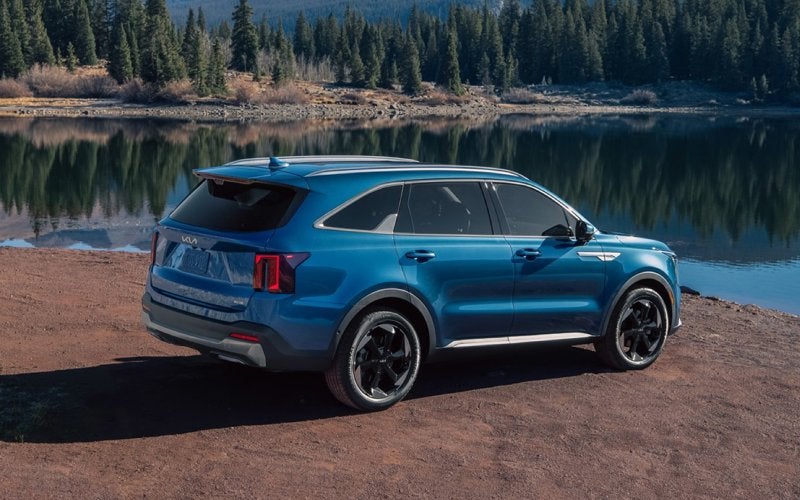
A 2025 Kia Sorento Hybrid has more to offer near Elizabeth NJ

Leasing gets brought up a lot when monthly payment is the main concern. The numbers look better on paper than a purchase loan for the same vehicle, and that is what pulls most people toward it. What the payment does not show is the full picture of what you are agreeing to, what it will cost at the end of the term, and whether the structure actually fits how you use a vehicle day to day. This guide covers how leasing works, where the real costs show up, and how to figure out whether a lease or a purchase makes more sense for your situation in 2027. How Leasing Works? When you lease a car, you pay for its expected depreciation during the lease term, plus a rent charge (financing cost), applicable taxes, and fees. The leasing company establishes the vehicle's residual value, which is its projected value at the end of the lease. The monthly payment is generally calculated using the vehicle's adjusted capitalized cost, residual value, rent charge, and applicable taxes and fees. At the end of the lease, you can typically return the vehicle, purchase it if your agreement includes a purchase option, or enter a new lease. Additional charges may apply for excess mileage, excessive wear, and applicable disposition fees. The Pros of Leasing Lower monthly payments are the main draw. Because payments only cover depreciation rather than the full vehicle cost, they run lower than a comparable purchase loan. For buyers focused on monthly budget, lease deals open up vehicles and trim levels that might otherwise be out of reach. Other advantages: New vehicle every 24 to 36 months with updated safety features, tech, and fuel economy Many new-car leases are structured to keep the vehicle within its manufacturer's warranty period, although warranty coverage depends on the vehicle, lease duration, mileage, and specific warranty terms. Maintenance and certain repairs may still be your responsibility You generally do not need to negotiate a trade-in value when returning a leased vehicle. However, you may still owe charges for excess mileage, excessive wear, or other contractually specified fees. Lower upfront costs compared to a purchase down payment in many cases Sales tax treatment on leased vehicles varies by state. Some states tax individual lease payments, while others calculate tax using the vehicle's purchase price or total lease payments. Car lease offers from manufacturers sometimes include incentivized money factors that make specific models especially competitive during promotional windows The Cons of Leasing No equity at lease end is the core trade-off. When a purchase loan is paid off, you own the vehicle. When a lease ends, you have made every payment and own nothing. For buyers who lease one vehicle after another, monthly payments continue indefinitely. Other downsides: Most standard vehicle leases include annual mileage limits, commonly ranging from 10,000 to 15,000 miles, although higher-mileage options may be available at an additional cost. Excess-mileage charges vary by leasing company, vehicle, and contract. Check the per-mile charge specified in your lease agreement before signing. Excessive wear and tear beyond the leasing company's acceptable-use standards may result in additional charges at lease return. Any security deposit is handled according to the terms of the lease agreement. Early termination penalties can be close to what it would have cost to finish the lease Vehicle modifications may be restricted by the lease agreement. You may be required to remove unauthorized modifications and restore the vehicle before returning it. Over the long term, repeatedly leasing vehicles can cost more than purchasing and keeping a vehicle for several years, although the overall financial outcome depends on purchase price, financing costs, depreciation, maintenance, and lease incentives. Leasing vs. Buying: A Quick Comparison Factor Leasing Buying Monthly payment Lower Higher Ownership None during term Builds over time Mileage 10,000 to 12,000/year typical No limit Customization Not permitted Permitted End of term Return, buy, or re-lease Vehicle is paid off Long-term cost Higher if leasing consecutively Lower if keeping vehicle long term Repair exposure Covered by warranty during lease Increases after warranty expires When Leasing Makes Sense Leasing fits a specific profile. If the following apply to you, a lease is worth seriously comparing against a purchase: You drive under 12,000 miles per year You keep vehicles in good condition with minimal interior or exterior damage You prefer having a current model year with up-to-date features every few years Your budget benefits more from lower monthly payments than from building equity You use the vehicle for qualifying business purposes and may be eligible to deduct the business-use portion of lease expenses, subject to IRS rules, business-use percentages, and applicable tax limitations. Consult a tax professional. When Buying Makes More Sense Buying is the better financial outcome for buyers who keep vehicles for six or more years, drive high annual mileage, or want full freedom over how the vehicle is used and maintained. Consider buying if: You regularly drive more than the mileage allowance in a standard lease. Excess-mileage charges can reduce or eliminate the financial savings of leasing, so compare higher-mileage lease options with purchasing. You want to modify the vehicle or use it for heavy hauling You plan to keep the vehicle beyond five years, at which point loan payments stop entirely You want to avoid the inspection and condition requirements that come with every lease return Building equity or owning the vehicle outright matters to your financial goals What to Watch For in Any Lease Agreement Before signing a lease on any vehicle, ask the dealer for these figures specifically: Money factor: The financing component of a lease, expressed as a decimal. Multiply it by 2,400 to estimate the equivalent APR. This is a common industry conversion, not an exact comparison of all financing costs. Residual value: the projected value of the vehicle at lease end. Higher residuals mean lower payments. Acquisition fee: A fee charged by the leasing company to arrange the lease. The amount varies by lender and may be paid upfront or included in the amount financed. Disposition fee: A fee that may be charged when you return the leased vehicle without purchasing it. The amount and any applicable waivers depend on the leasing company's contract and policies. Total drive-off amount: everything due at signing, not just the first month’s payment The advertised monthly payment on car lease offers does not reflect all of these costs. The total drive-off and the fees at return are what determine the actual cost of the lease. Find Lease Deals at Sansone Auto Group in New Jersey If you are ready to explore your options for a car for lease in New Jersey, Sansone Auto Group is the place to start. It is conveniently located at 90-100 Route 1 North, Woodbridge, NJ 07001. Sansone Auto Group represents Toyota, Kia, Hyundai, Nissan, Mazda, Chrysler, Jeep, Dodge, and RAM, with multiple dealerships operating at its Woodbridge location. Its team can help you explore available manufacturer lease offers, compare leasing and purchasing options, and evaluate financing structures based on your budget and driving habits. Call 866-328-3333 or visit sansoneauto.com to get started. FAQs What is a car for lease versus buying? Leasing means paying for depreciation over the term, not the full vehicle. Payments are lower, but you own nothing at the end. Buying means higher payments and eventual ownership once the loan is paid off. Are Toyota lease deals worth considering? They can be, especially when Toyota is running promotional money factors on specific models. Compare the total lease cost against a purchase loan over the same number of years before deciding. Mileage is the biggest variable. What should I look for in car lease offers? Money factor, residual value, acquisition fee, disposition fee, and total drive-off amount. The advertised monthly payment does not include all of these. Ask the dealer to break each one out before signing. What are automatic lease deals? Automatic lease deals generally refer to leasing offers on vehicles equipped with automatic transmissions. These are not a separate financing category; the lease terms depend on the vehicle, manufacturer incentives, leasing company, mileage allowance, and credit approval. What should NJ drivers know about leasing? New Jersey commuters, particularly those traveling regularly into the New York City metropolitan area, should estimate their annual mileage carefully before choosing a lease. Longer commutes can make standard mileage allowances insufficient. If you are regularly above 12,000 miles per year, lease overage charges can add up fast. New Jersey sales tax on long-term vehicle leases can be calculated using either the lessor's original purchase price or the total lease payments, subject to applicable tax rules.

Kia's 2027 lineup covers a lot of ground, including compact and three-row SUVs, a compact sedan and hatchback, and a midsize performance-oriented sedan. That range is useful but it also makes the comparison harder than it looks. The 2027 Kia Sportage, Telluride, K4, and K5 all serve different buyers. Here is what separates them. 2027 Kia Lineup at a Glance Model Type Powertrain Key Strength Sportage Compact SUV Gas or Hybrid Efficiency + off-road trim options Telluride 3-Row SUV Gas or Hybrid Three-row seating, up to 5,000-lb towing (gas model) K4 Compact Sedan/Hatchback Gas or Turbo Gas Value + up to 39 MPG highway (sedan) K5 Mid-Size Sedan Gas Performance-oriented GT trim, 290 hp, available AWD 2027 Kia Sportage: The Practical Compact Performance-oriented GT trim, 290 hp, available AWD X-Line trims drop slightly lower given the added ground clearance and terrain capability. The 2027 Sportage offers up to 8.3 inches of ground clearance on select trims. Available Multi-Terrain Mode provides Snow, Mud, and Sand settings on equipped AWD models. Rear seat legroom sits at 41.3 inches. Kia calls this class-leading and backs it with its own segment comparison. The Sportage offers a 12.3-inch instrument display and a 12.3-inch infotainment touchscreen on equipped trims. Wireless Apple CarPlay and Android Auto are available, with equipment varying by trim. The hybrid version changes the value case considerably. The 2027 Sportage Hybrid uses a 1.6-liter turbocharged hybrid powertrain producing 232 combined horsepower and 271 lb-ft of combined torque. Kia describes its torque output as class-leading for the segment. FWD hybrid trims return 40/42/41 MPG. AWD hybrid trims come in at 35/36/35 MPG. No plug-in charging is needed. The hybrid battery is recharged through regenerative braking and the vehicle's hybrid powertrain, so external plug-in charging is unnecessary. The 2027 Kia Sportage has earned IIHS Top Safety Pick+ recognition. The 2026 model's NHTSA rating should not be presented as a verified 2027 rating. The 2027 gas-powered Sportage offers up to 2,500 pounds of towing capacity when properly equipped. All trims come with Kia's 10-year/100,000-mile powertrain warranty. 2027 Kia Telluride: The Three-Row Hauler The 2027 Kia Telluride is Kia's largest SUV in this comparison, offering three rows of seating and substantial cargo capacity. The gas version runs a 2.5-liter turbocharged engine producing 274 horsepower and 311 lb-ft of torque. The 2027 gas-powered Telluride LX returns 20/26/22 MPG. Fuel economy varies by trim, with the X-Pro variants rated as low as 17/22/19 MPG (city/highway/combined). Cargo behind the third row is 22.3 cubic feet. Seating is up to eight on bench-configured trims. The Telluride S offers seven-passenger seating with second-row captain's chairs, while the LX provides eight-passenger seating with a second-row bench. Towing capacity hits 5,000 pounds on the gas Telluride. The Telluride X-Pro adds an electronic limited-slip differential, 9.1 inches of ground clearance, and 18-inch all-terrain tires. The 2027 Kia Telluride Hybrid steps up meaningfully. Output jumps to 329 horsepower and 339 lb-ft. FWD hybrid efficiency is 34/36/35 MPG on EX trims, dropping to 30/32/31 MPG on AWD variants. Total driving range on the EX FWD is up to 637 miles on a single tank. Towing capacity on the hybrid is 4,500 pounds. The Telluride Hybrid includes Stay Mode, which uses the hybrid battery to power climate control, lighting, and audio while parked for up to 20 minutes or until the battery reaches approximately 20%. Hybrid Telluride trims seat seven, not eight, due to the battery packaging. 2027 Kia K4: The Efficiency Case The 2027 Kia K4 is available as a sedan and a hatchback. The 2027 Kia K4 sedan's standard engine delivers up to 29/39/33 MPG (city/highway/combined), depending on trim and configuration. The K4 GT-Line Turbo features a 1.6-liter turbocharged engine producing 190 horsepower and 195 lb-ft of torque, with fuel economy varying by configuration. Interior highlights include nearly 30 inches of combined display space. Standard wireless connectivity covers Apple CarPlay and Android Auto. The GT-Line Turbo offers additional premium equipment, including a power sunroof and Harman Kardon audio, depending on package and configuration. Kia cites up to 29 available driver assistance features across the lineup. The hatchback follows the same powertrain structure. EX and GT-Line hatchback trims return 28/34/30 MPG. GT-Line Turbo hatchback comes in at 26/33/28 MPG. Cargo flexibility comes through 60/40 split-folding rear seats on both body styles. The 2026 Kia K4 earned IIHS Top Safety Pick+ recognition. Its 2026 NHTSA rating should be identified separately rather than presented as a rating for the 2027 model. 2027 Kia K5: The Performance Sedan The 2027 Kia K5 offers a standard 2.5-liter naturally aspirated four-cylinder engine producing 186 horsepower. The GT trim features a 2.5-liter turbocharged engine producing 290 horsepower and 311 lb-ft of torque. The GT trim has an advertised 0–60 mph time of 5.4 seconds, based on AMCI-certified testing of the 2025 K5 GT; this is not a separate 2027 model-year test result. Available all-wheel drive helps distribute torque between the front and rear axles for improved traction and control. This is a different kind of driving experience compared to anything else in the Kia lineup and that is the point. It is a mid-size sports sedan built to feel it. MPG figures for the 2027 K5 are not listed on the current Kia USA page. For the most current fuel economy ratings, check the official Kia K5 spec sheet or speak with a dealer. Which 2027 Kia Is Right for You? The 2027 Kia SUV lineup answers different questions. For buyers who want hybrid efficiency without plug-in charging, the Sportage Hybrid delivers up to an EPA-estimated 41 MPG combined in FWD configurations. For families needing three rows and substantial towing capacity, the Telluride offers up to 5,000 pounds of towing capacity in its gas configuration and up to 4,500 pounds in its hybrid configuration. The K4 earns its place as the value entry, particularly for buyers who cover highway miles regularly. And the K5 is the right answer only if you want the performance edge, because that is what it was built for. Find Your 2027 Kia in New Jersey If you are ready to explore the 2027 Kia lineup in New Jersey, Sansone Auto Group is the place to start. It is conveniently located at 90-100 US Highway 1 North, Woodbridge, NJ 07001. The team can help you compare models side by side and find the right fit for how you actually drive. FAQs What models are included in the 2027 Kia lineup? Kia's 2027 lineup includes the Sportage compact SUV, the three-row Telluride, the K4 compact sedan and hatchback, and the K5 midsize sedan. Both the Sportage and Telluride are available in gas and hybrid configurations. What is the MPG of the 2027 Kia Sportage? The 2027 gas Sportage returns up to 25/33/28 MPG on FWD trims, with AWD fuel economy varying by trim. The Sportage Hybrid returns 40/42/41 MPG on FWD trims and 35/36/35 MPG on AWD trims (city/highway/combined). How much can the 2027 Kia Telluride tow? The gas Telluride tows up to 5,000 pounds. The Telluride Hybrid tows up to 4,500 pounds with the available tow hitch and self-leveling rear suspension. What engine does the 2027 Kia K5 have? The 2027 Kia K5 offers a standard 2.5-liter four-cylinder engine producing 186 horsepower, while the GT trim features a turbocharged 2.5-liter engine producing 290 horsepower. The GT trim reaches 60 mph in 5.4 seconds and is available with torque-vectoring all-wheel drive. Is the 2027 Kia K4 available as a hatchback? Yes. The K4 comes in both a sedan and a hatchback body style. The 2027 K4 Hatchback is available in EX, GT-Line, and GT-Line Turbo trims. Its rear seats feature a 60/40 split-folding configuration.

Buying a car in NJ sounds straightforward. That is, until you’re sitting across a desk trying to decode a contract you’ve never seen before. Most costly car dealership mistakes happen before the paperwork even starts, during research, the financing conversation, or when a dealer slides in add-ons. 10 Common Car Buying Mistakes To Avoid Here are ten common car-buying mistakes New Jersey shoppers should avoid, along with relevant consumer-protection rules and practical steps to help them make informed decisions. Focusing on the Monthly Payment Instead of the Total Price This is one of the most common car buying mistakes across every budget range. A dealer may offer a longer loan term, such as 84 months instead of 48 months, to reduce the monthly payment. However, if the loan amount and APR remain the same, extending the repayment period generally increases the total interest paid and keeps the buyer in debt for longer. Ask for the complete out-the-door price before any payment is discussed. A longer loan term also means you may owe more than the car is worth for the first few years, which creates problems if you need to trade or sell early. Get the total financed amount in writing alongside the monthly figure so you can compare them accurately. Skipping Pre-Approval Before You Shop Shopping for a car without arranging financing in advance can make it harder to judge whether a dealer's financing offer is competitive. AAA recommends getting pre-approved through a bank or credit union before visiting a dealership. This gives buyers an independent rate benchmark to compare against dealer financing. Pre-approval gives you a rate benchmark so you can evaluate dealer financing on its actual merits. It also keeps negotiations focused on the vehicle price rather than monthly payment terms. Dealer financing can be competitive, but you need a number to compare it against. Not Doing Research Before You Visit One of the most avoidable car dealership mistakes is arriving without knowing what the vehicle should cost or what features come standard. Before visiting a dealership, research its reputation, read customer reviews and check whether the New Jersey Division of Consumer Affairs has published enforcement actions or other relevant consumer-protection information about the business. Use official manufacturer websites to confirm standard features and available trim differences. Check the dealer’s record through the NJ Division of Consumer Affairs before visiting. Shoppers who research first negotiate from a position of knowledge rather than curiosity. Agreeing to Dealer Add-Ons Without Asking About Each One Paint protection, VIN etching, nitrogen tire fills, and fabric coating packages are routinely added to deals without much explanation. New Jersey's automotive sales regulations prohibit dealers from misrepresenting optional aftermarket products, such as service contracts or window etching, as mandatory. Dealers must also accurately disclose the prices of dealer-installed options and itemise applicable aftermarket merchandise in sales documents and contracts. Ask for a complete itemized list of every add-on in your deal before you sign. If an add-on was not part of your original negotiation, ask for it to be removed or clearly explained. Some protective coatings and service packages are available elsewhere for significantly less. Ignoring New Jersey’s Hidden Car Buying Costs Protections Hidden car buying costs are a documented issue in NJ. The state Attorney General has issued enforcement guidance confirming that certain fee practices already violate the Consumer Fraud Act. New Jersey has taken enforcement action against dealerships for advertising vehicle prices that exclude required dealer fees and for other misleading pricing practices. Loan packing, adding products to a loan without the consumer's informed consent, is another serious consumer-protection concern. Ask for an itemised breakdown of the vehicle price, dealer fees, optional products and financing costs before signing. Review every line of the price breakdown before signing, not just the summary page. If fees appear that were not part of your negotiation, ask what each one covers. New Jersey's Consumer Fraud Act authorizes civil penalties of up to $10,000 for a first violation and up to $20,000 for subsequent violations. Whether a practice violates the law depends on the applicable legal requirements and facts of the case; consumers should not assume that every unexpected fee automatically constitutes fraud. Rushing Through the Contract This is where many hidden car buying costs slip through. NJ consumer protection guidance specifically flags contracts where the signed terms differ from what was verbally agreed. Read every section carefully, including any digital contract terms. Under New Jersey's Consumer Protection Leasing Act, consumers are entitled to review a vehicle lease contract for one 24-hour business day before signing. This is a pre-signing review period, not a general right to cancel a signed vehicle purchase or lease. Confirm every agreed-upon price, rate, and term is reflected in writing before you sign anything. Not Accounting for All the Costs of Buying a Car in NJ The purchase price is only one part of what you will spend. Many buyers make the mistake of budgeting only for the vehicle and are caught off guard by what comes after. Hidden car buying costs to plan for when buying a car in NJ: New Jersey sales tax: 6.625% on vehicle purchases Registration and title fees Auto insurance, which can vary significantly depending on the vehicle Routine maintenance and any anticipated repairs Fuel costs, particularly if you are stepping up from a more efficient vehicle Making a Decision Under Pressure High-pressure tactics are specifically flagged by New Jersey’s Division of Consumer Affairs as a consumer warning sign. Urgency around inventory, same-day pricing, and rushed signings are designed to prevent you from comparing options or reviewing terms. Any deal that requires an immediate decision is worth slowing down on. Take contracts home to review if you need time. You are entitled to read what you are signing. Do not let time pressure prevent you from comparing offers or reviewing the contract. Skipping a Vehicle History Check on a Used Car Before buying a used car in New Jersey, check the state's available flood- and salvage-title records by VIN and obtain a vehicle history report. These checks can help identify title issues, but they should not replace an independent inspection or a review of the vehicle's full history. NHTSA also maintains a free recall lookup tool at nhtsa.gov. Run the VIN through NHTSA’s recall database before finalizing any used car purchase. Ask for service records and confirm the title is clear. For used vehicles, a pre-purchase inspection by an independent mechanic is one of the most valuable steps a buyer can take before committing. Letting Emotion Drive the Buying Decision One of the most common car buying mistakes has nothing to do with paperwork. Buyers frequently choose a vehicle based on how it looks or feels rather than whether it fits their actual budget and needs. According to Money, this mismatch shows up quickly once ownership costs start coming in. Set your must-haves before you start shopping and hold to them during the visit. If a vehicle does not meet your practical and financial criteria, keep looking. A car that works for your life will serve you better than one that does not, regardless of the showroom experience. New vs. Used Car Buying Considerations in NJ Factor New Vehicle Used Vehicle NJ Lemon Law coverage Yes, covers serious unresolved defects Potentially, for eligible vehicles meeting New Jersey’s age, mileage, price, and other legal requirements. Dealer add-on risk High High Vehicle history transparency Full from manufacturer Requires VIN and history check Pre-purchase inspection Optional Strongly recommended Recall check via NHTSA Recommended Strongly recommended. Check the VIN for unrepaired safety recalls. Lease contract review period 24-hour business day Depends on deal type Find Your Next Car in New Jersey Without the Runaround If you are ready to buy in New Jersey, Sansone Auto Group is the place to start. It is conveniently located at 90-100 US Highway 1 North, Woodbridge, NJ 07001. The team works across multiple brands and can walk you through current inventory, explain every cost in your deal, and help you avoid the car dealership mistakes and hidden car buying costs that catch most shoppers off guard. FAQs What are the most common car buying mistakes in New Jersey? Common mistakes include focusing only on the monthly payment, skipping financing pre-approval, accepting dealer add-ons without questioning them, and not accounting for hidden costs like NJ sales tax, registration fees, and insurance. Rushing through a contract without reading it is also a frequently cited issue. What hidden car buying costs should I expect when buying a car in NJ? Budget for New Jersey sales tax, generally 6.625% of the taxable purchase price, along with applicable title and registration fees, insurance and ongoing ownership costs. Ask for an itemised out-the-door price that identifies dealer fees and optional add-ons separately. Optional products should not be presented as mandatory unless there is a valid basis for doing so. What car dealership mistakes does NJ law protect against? New Jersey's consumer-protection laws and automotive sales regulations address misleading advertised prices, undisclosed charges, unauthorised or misrepresented add-on products, and other deceptive sales practices. Whether a particular transaction violates the law depends on the facts and the applicable requirements. Should I get pre-approved before visiting a dealership in NJ? Yes. Getting pre-approved through a bank or credit union gives you a financing benchmark to compare with a dealership's offer. It can help you negotiate the vehicle price separately from the financing terms, but you should still compare APR, loan length, fees and total repayment cost before choosing a loan. Does New Jersey have a Lemon Law? Yes. New Jersey has separate Lemon Laws for qualifying new and used vehicles. New-car coverage generally requires a qualifying defect reported within the first 24,000 miles of operation or two years after original delivery, whichever occurs first. Used-car coverage depends on specific eligibility and warranty requirements.