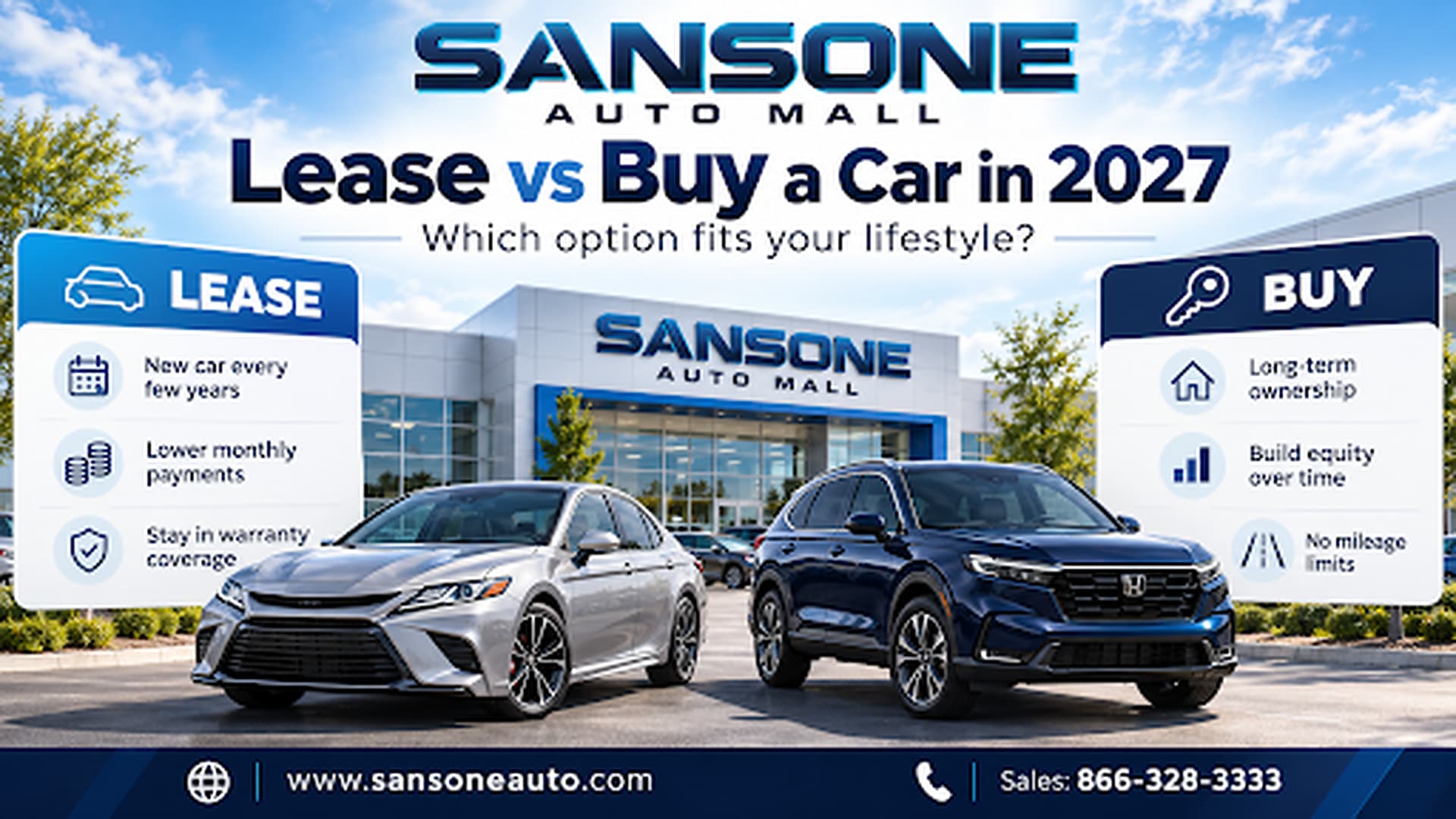
Neither leasing nor buying is universally the right call. The answer depends on how many miles you drive, how long you keep your cars, and whether building equity matters to your financial picture. What has changed recently is the math. Payments on both sides have shifted, the gap between lease and loan costs has narrowed, and the choice is less obvious than it used to be.
Here's a straightforward breakdown of what each option actually costs, what you give up, and how to figure out which one fits your situation.
Leasing vs Buying: The Core Difference
When you lease, you pay for the depreciation of the vehicle during your contract term, plus interest and fees. You hand it back at the end and walk away with no asset.
When you buy, you finance the full vehicle value, pay more per month, and own it outright once the loan is paid off. Every payment after that point costs nothing.
Neither path is wrong. They serve different financial situations.
Lease vs Finance: Full Comparison
Is It Better to Lease or Buy a Car? Depends on These Four Things
How many miles do you drive?
Most leases cap you at 10,000 to 15,000 miles per year. Excess miles cost 12 to 30 cents each, and those charges add up quickly. If you're doing long NJ commutes, covering multiple counties weekly, or taking regular road trips, buying almost always works out to be cheaper once you factor in overage penalties.
How long do you keep your cars?
Leasing makes financial sense if you want a new vehicle every two to three years without the hassle of selling. If you typically keep a car for seven or more years, buying is almost always the better financial outcome. The loan ends; lease payments don't.
Does equity matter to you?
A leased vehicle builds no equity. When the contract ends, you have no asset. With a purchase loan, every payment moves you closer to owning something outright, and that asset can be sold or traded when you're ready to move on.
What's your credit situation?
Lease approvals tend to require stronger credit, and the best lease terms go to buyers at the top end of the credit range. If your credit score is below 700, financing may be more accessible and may offer better terms than a lease.
Leasing vs Buying in NJ: What's Different Here
New Jersey has some of the highest vehicle registration and insurance costs in the country. A few things worth knowing:
NJ charges sales tax on the full vehicle price even for leases, unlike some states that only tax monthly payments. This affects your total cost calculation.
Long commute corridors (Route 1, Route 9, the Turnpike) and NJ's dense suburban-to-urban mix put real miles on vehicles. Buyers who commute daily often exceed standard lease mileage caps faster than they expect.
If you plan to use a vehicle for a business registered in NJ, lease payments may be partially deductible as a business expense. Confirm with a tax professional before making a decision based on this.
When Leasing Makes More Sense
You want lower monthly payments and don't mind not building equity.
You drive fewer than 12,000 miles per year.
You prefer a new vehicle every two to three years without the process of selling your old one.
You want to stay in warranty coverage and avoid maintenance costs for unexpected repairs.
You're buying for a business and plan to write off the payment as an operating expense.
When Buying Makes More Sense
You drive high annual mileage and a mileage cap would cost you in overages.
You plan to keep the vehicle for five or more years.
Building equity and owning an asset matters to your financial plan.
You want the freedom to modify, customize, or repurpose the vehicle without restrictions.
You're buying used, where lease options are limited and financing rates on certified pre-owned vehicles can be competitive.
Talk It Through at Sansone Auto, Woodbridge NJ
The right call between leasing and buying depends on specifics: your credit, your mileage, your timeline, and what's currently available in inventory. The finance team at Sansone Auto located at 90-100 Route 1 North, Woodbridge, NJ 07001, can walk you through current lease offers and loan rates on the brands they carry and help you model out what each option actually costs for the vehicle you're considering.
FAQs
Is it better to lease or buy a car in 2027?
It depends on your driving habits and financial priorities. Leasing offers lower monthly payments and a new vehicle every few years, but builds no equity. Buying costs more per month but ends with an owned asset. High-mileage drivers and long-term owners almost always come out ahead with financing.
What is the difference between a car lease and car finance?
When you lease, you pay for the vehicle's depreciation over your contract term and return it at the end. When you finance, you borrow the full purchase price and own the car once the loan is paid off. Lease terms typically run 24 to 36 months; loan terms typically run 60 to 72 months.
How much does it cost to go over mileage on a lease?
Most leases charge between 12 and 30 cents per excess mile, depending on the brand and contract terms. On a 36-month lease with a 12,000-mile annual cap, going 5,000 miles over your limit could add 600 to 1,500 to your final bill.
Can you negotiate a lease in NJ?
Yes. The capitalized cost (selling price), money factor (lease interest rate), and mileage cap are all negotiable. Getting the vehicle price down before you discuss lease terms has the biggest impact on your monthly payment.
Where can I lease or finance a car in Woodbridge, NJ?
Sansone Auto Group at 90-100 Route 1 North, Woodbridge, NJ 07001 carries inventory across multiple brands with both lease and financing options. Call 866-328-3333 or visit sansoneauto.com to explore current offers.